

The Performance Workplace
Reframing Real Estate, Behaviour and Value Across Multi-Site Organisations
A market moving beyond the return narrative.
The global workplace conversation has been dominated by a single question: how do organisations bring people back?
It is, increasingly, the wrong question.
Across markets, attendance has stabilised at levels materially below pre-2020 baselines, typically ranging between 50–70% of previous peak occupancy, with significant intra-week variation. Tuesday through Thursday have emerged as dominant anchor days, while Monday and Friday remain structurally suppressed.
Yet this stabilisation has not delivered clarity. Instead, it has exposed a deeper issue: organisations are operating workplaces designed for patterns of behaviour that no longer exist.
What has emerged is not a temporary dislocation, but a structural mismatch between:
How organisations expect space to perform, and
How people now choose to work
For multi-site occupiers, this gap is amplified. Portfolio decisions, capital allocation, and operational models are still, in many cases, anchored to outdated assumptions around density, presence, and utilisation.
The result is a growing inefficiency embedded within corporate real estate.
Leading organisations are now reframing the challenge - not as a question of return, but as a question of performance.

Workplace behaviour: segmentation, not uniformity.
One of the most consistent findings across global workplace studies is that employee behaviour is not homogenous. It is segmented - and increasingly polarised.
Broadly, four behavioural archetypes have emerged:
Office Advocates: Individuals who derive clear value from physical presence, often linked to role type, seniority, or collaboration intensity
Hybrid Pragmatists: The largest segment, balancing home and office based on task and schedule
Reluctant Returners: Employees who attend primarily due to expectation rather than intrinsic value
Remote Preferents: Individuals who see minimal benefit in physical workplaces for their role
In most organisations, the Hybrid Pragmatist cohort represents 40–60% of the workforce, while Reluctant Returners and Remote Preferents together can exceed 30–40%.
This segmentation matters.
It explains why uniform policies consistently underperform. It also highlights why mandates alone have limited impact: they fail to address the underlying drivers of behaviour.
The critical insight is that attendance is an output, not an input.
Employees are not responding to instruction - they are responding to perceived value.
Where the workplace offers:
Faster decision-making
Higher-quality collaboration
Stronger social and cultural connection
attendance increases organically.
Where it does not, presence becomes performative and inconsistent.
For organisations, this reframes the design and strategy challenge.
The objective is no longer to accommodate people. It is to create conditions that justify presence.
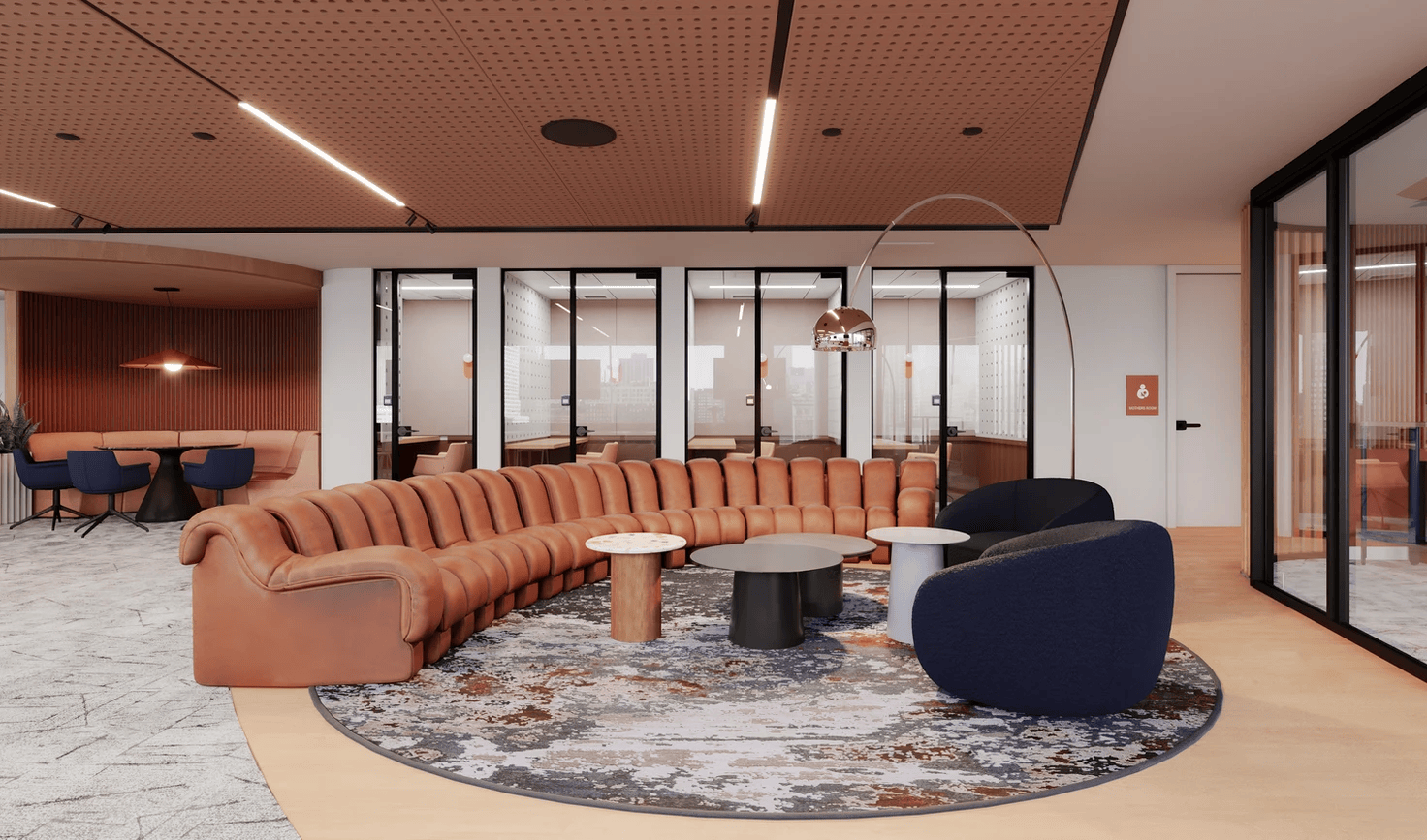
Utilisation vs effectiveness: a misaligned metric.
Traditional workplace strategies have been heavily influenced by utilisation metrics—how many desks are occupied, how frequently spaces are used, and how efficiently square footage is deployed.
These metrics are now insufficient.
Data across multiple portfolios shows that desk utilisation frequently falls below 50% on average, even in organisations with formal return policies. At the same time, collaboration spaces are often over-subscribed during peak periods, creating bottlenecks that undermine the very activities the workplace is intended to support.
This reveals a structural imbalance:
Too much space allocated to individual work
Insufficient space designed for interaction and group activity
More importantly, it highlights a flawed assumption: that utilisation equates to value.
In reality, the most critical workplace activities - decision-making, innovation, relationship-building—are episodic, not continuous. They require quality of interaction, not constant occupancy.
Leading organisations are therefore shifting from utilisation to effectiveness metrics, including:
Speed of decision-making
Cross-team collaboration frequency
Employee engagement and satisfaction
Retention and talent attraction outcomes
This shift has direct implications for portfolio design.
Space is no longer optimised for maximum occupancy. It is optimised for maximum impact.
The economic recalibration of real estate portfolios.
The financial implications of these behavioural shifts are significant.
Corporate real estate remains one of the largest fixed costs on the balance sheet. However, in many organisations, it is now underutilised relative to its historical purpose.
This is driving a wave of portfolio reassessment.
Data indicates that:
A significant proportion of organisations are actively reviewing their footprint within the next 12–24 months
Lease expiries are being used as strategic inflection points
Capital is being reallocated from quantity of space to quality of environment
However, the narrative of widespread downsizing is overstated.
In practice, three distinct strategies are emerging:
1. Consolidation with reinvestment
Organisations reduce overall footprint while upgrading remaining locations - prioritising experience, location, and capability.
2. Network expansion
Rather than centralising, organisations introduce additional nodes - regional hubs, flexible spaces, or satellite offices - to align with distributed work patterns.
3. Portfolio optimisation without reduction
In sectors where collaboration and physical presence remain critical, organisations maintain footprint but redesign for new patterns of use.
Across all three strategies, the common factor is intentionality.
Real estate is no longer treated as a static asset. It is managed as a dynamic portfolio, continuously adjusted to align with business needs.
For multi-site organisations, this introduces a more complex but more powerful model - one where each location has a clearly defined role within the system.
Experience as a measurable driver of performance.
The link between workplace experience and organisational performance is becoming increasingly quantifiable.
Employees consistently report higher levels of:
Engagement
Productivity
Intent to stay
in environments that support both functional and emotional needs.
However, the gap between expectation and reality remains significant.
In many organisations:
Employees rate their home environment higher for focus work
Offices are perceived as better for collaboration—but inconsistent in delivery
Friction points (technology, booking systems, overcrowding) reduce overall effectiveness
This creates a paradox.
Organisations are investing heavily in workplace improvements, yet the perceived value is often diluted by execution gaps.
The most effective organisations address this by treating experience as an integrated system.
This includes:
Spatial design aligned to actual work patterns
Seamless digital integration (booking, collaboration tools, hybrid meeting capability)
Operational services that support day-to-day usability
Clear behavioural frameworks that guide how space is used
For multi-site portfolios, consistency becomes critical.
Employees do not experience the workplace as individual projects. They experience it as a network. Inconsistent quality across locations undermines trust in the system.
Leading organisations therefore define a minimum viable experience standard, ensuring that every site meets a baseline level of performance - while allowing for differentiation where strategically appropriate.
The rise of data-led workplace strategy.
The increasing availability of workplace data is transforming how decisions are made.
Occupancy sensors, badge data, booking systems, and employee surveys provide a detailed view of:
When people attend
How space is used
Where inefficiencies exist
However, the maturity of data utilisation varies significantly.
In many organisations, data is descriptive rather than diagnostic - it explains what is happening, but not why.
The leading edge is moving towards predictive and prescriptive models.
These organisations:
Use data to model different portfolio scenarios
Test interventions before implementation
Continuously refine layouts and policies based on observed behaviour
For example:
Identifying underutilised areas and reallocating them to higher value uses
Adjusting collaboration space ratios based on peak demand patterns
Aligning workplace provision with specific team behaviours rather than organisational averages
This approach reduces risk and increases confidence in decision-making.
It also enables a shift from periodic transformation to continuous optimisation.
Delivery risk in a constrained environment.
While strategy is evolving, the delivery environment has become more complex.
Key pressures include:
Persistent cost inflation in construction markets
Supply chain volatility affecting lead times and availability
Increasing regulatory requirements, particularly around sustainability and compliance
For multi-site programmes, these risks are compounded by scale.
Without a structured approach, variability between projects can lead to:
Cost overruns
Programme delays
Inconsistent quality
Leading organisations mitigate this through:
Early integration of delivery considerations into strategy
Standardisation of design and procurement approaches
Clear governance frameworks across the portfolio
This enables them to achieve:
Greater cost certainty
More predictable timelines
Consistent outcomes across locations
Delivery, in this context, becomes a strategic capability - not a downstream function.
From projects to platforms: a new operating model.
The cumulative effect of these shifts is the emergence of a new operating model for workplace.
In this model:
The workplace is treated as a continuous system, not a series of one-off projects
Strategy, design, and delivery are integrated into a single lifecycle
Performance is measured and optimised over time
This requires organisations to develop new capabilities:
Portfolio-level thinking rather than site-by-site decision-making
Data literacy to interpret and act on workplace insights
Governance structures that align stakeholders across functions
It also requires a different type of partner.
The traditional separation between advisor, designer, and contractor is increasingly misaligned with client needs.
What organisations require is integration- an ability to connect strategy to execution and ensure that intent is delivered consistently across the portfolio.
Conclusion: the workplace as a system of performance.
The workplace is no longer defined by where work happens. It is defined by how effectively it enables organisations to perform.
For multi-site occupiers, the challenge is not simply to adapt to new patterns of work, but to redesign their real estate, experience, and delivery models around those patterns.
This requires clarity of thinking, discipline in execution, and a willingness to challenge legacy assumptions.
Those that succeed will not be those that attempt to restore previous norms. They will be those that recognise the workplace for what it has become:
A system - one that, when properly aligned, delivers measurable impact across talent, culture, and financial performance.
At DBW, this is the lens through which we approach every engagement. Not as a question of space. But as a question of performance.
