Workplace Strategy: Aligning People & Place
What is workplace strategy?
Every workplace makes a case for how an organization works. Workplace strategy decides whether that case is deliberate.
Work now happens across offices, homes, and everywhere in between. For multi-site organizations, that shift turns the workplace from a fixed cost into a decision. It shapes how people perform, how culture travels, and how capital is spent. At DBW, we help leaders make that decision with evidence and intent.
Defining workplace strategy
Workplace strategy is the intentional alignment of the physical environment with three things: the people who use it, the place it creates, and the performance it is expected to deliver. It covers location planning, operating models, and data-informed design. It starts with a question most organizations skip: what should this space make possible?
No two organizations should arrive at the same answer. Culture, workforce, and strategy differ, so the workplace should too.
What an intentional strategy delivers
People
Experience: People do different kinds of work over the course of a week, including focused tasks, team sessions, client meetings, and informal conversations. A workplace designed for that range gives employees more control over how and where they work. That autonomy is often what makes the office worth the commute.
Talent: Candidates evaluate the workplace along with the role, the compensation, and the leadership. A workplace that reflects how people want to work signals that the organization takes its employees seriously. Over time, that affects who accepts an offer and who decides to stay.
Collaboration: Collaboration depends on proximity and on having the right kind of space available when it’s needed. When teams that rely on each other are located close together, and project rooms and open areas are easy to find and book, more work gets done in person and less waits for a scheduled call.
Place
Utilization: Most organizations are paying for more space than they use on a typical day. Occupancy data shows which areas are in demand and which sit empty, so leaders can consolidate, reconfigure, or reinvest with confidence. For multi-site portfolios, these findings can be applied across locations instead of one building at a time.
Identity: Employees and visitors form an impression of an organization from its environment. Materials, layout, and the way space is shared all communicate what the organization values. A well-planned workplace makes that message consistent with the brand and culture leadership wants to create.
Performance
Productivity and innovation: When the environment matches the work being done, people spend less time searching for a place to work or working around distractions. Quiet space for focused work and flexible space for problem-solving each support a different kind of output, and both are needed.
Better decisions: Workplace strategy brings evidence into decisions that are often made on instinct. Utilization data, employee surveys, and observation of how space is used give leaders a clear basis for decisions about design, space allocation, and capital investment.
Why it matters now
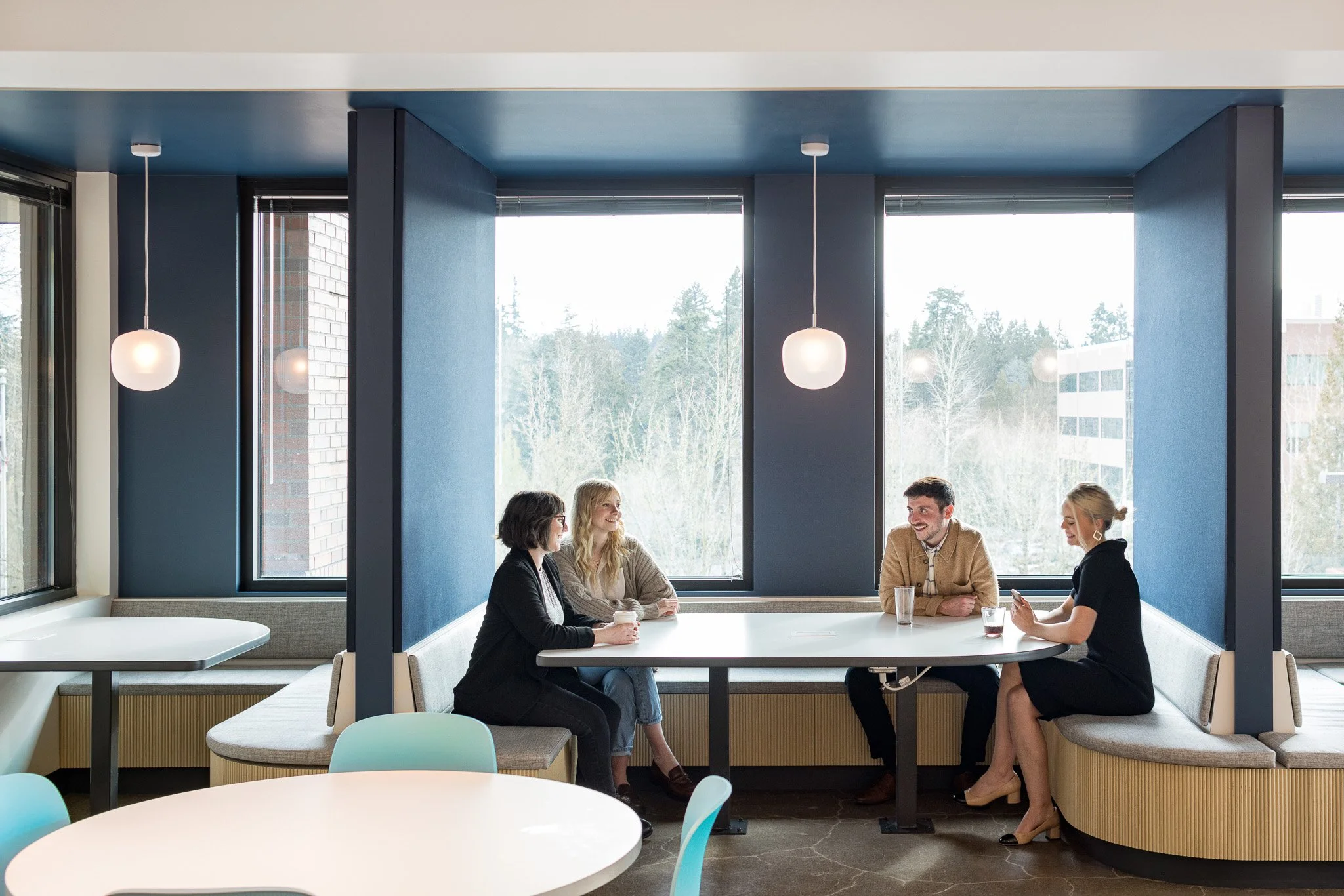
The question has moved from where people work to why they come together. Hybrid models are now standard practice, expectations around flexibility are permanent, and technology, including AI, is changing what the workplace needs to support. Organizations that treat the workplace as a static asset fall behind the people they’re trying to keep.
How workplace strategy has evolved
Workplace strategy once planned around headcount and desks. Now it designs for the full range of work: focusing, collaborating, learning, socializing, and recharging. It recognizes that a team doing deep analytical work needs something different from a team that works out loud, and it plans for both.
The role of the workplace has also significantly shifted to become a reflection of the organization's brand, values, and culture. A well-designed workplace is a strategic asset that not only enables people to perform at their best but also connects them deeply to the organization's mission and purpose. Thoughtfully created environments foster meaningful interactions, reinforce organizational identity, and enhance overall employee satisfaction and engagement.
Workplace Strategy vs. Real Estate Strategy
Real estate strategy addresses the foundational elements of space planning—such as square footage, lease terms, location, and anticipated growth. It plays a critical role in helping organizations secure the right physical footprint to support long-term operational needs.
Workplace strategy complements this by focusing on how that space functions to support people and purpose. It draws from employee feedback, workplace behavior, and cultural insights to design environments that foster performance, connection, and well-being.
Where real estate strategy answers “what” and “how much”, workplace strategy explores “why”, “how”, and “for whom.” Both strategies are complementary to each other, with workplace strategy ensuring a meaningful alignment between space utilization, employee satisfaction, and business goals.
Key takeaway
A workplace is never neutral. It either advances the organization’s direction or works against it. Workplace strategy makes that choice deliberate, and the value compounds. Decisions made now shape how people work, what the organization becomes, and what the next generation of leaders inherits.
DBW partners with organizations to define, design, and deliver workplaces built around their people and their goals. Whether you’re entering a new space or rethinking the one you have, we start with the questions that matter.
Book a discovery meeting to start the conversation.